THE LOOP
A conveyor of heat
Copernicus Marine says the AMOC accounts for around 90% of the northward ocean heat transport across the Atlantic, sinking cold and salty in the far north.
See the numbers
OCEAN STREAMS EXPLAINED
1.2 PW of heat carried north
AI-generated image, not a photograph of a real person or place.
Warm water flows north at the surface, cold water returns south below.
Scientists call this loop the Atlantic Meridional Overturning Circulation, or AMOC. The Gulf Stream is its best-known part, and together they help shape the climate of north-west Europe.
THE SHORT ANSWER
The Gulf Stream is a current; the AMOC is the whole loop.
They are related, but they are not the same thing.
THE LOOP
Copernicus Marine says the AMOC accounts for around 90% of the northward ocean heat transport across the Atlantic, sinking cold and salty in the far north.
See the numbersMEASURING
Since 2004 the RAPID array at 26°N has measured the overturning every hour instead of every five years, using moorings and even old telephone cables.
How it is measuredCLIMATE
Ocean heat stored in summer is released in winter and carried east by westerly winds, giving Europe its characteristically mild winters.
Test a claim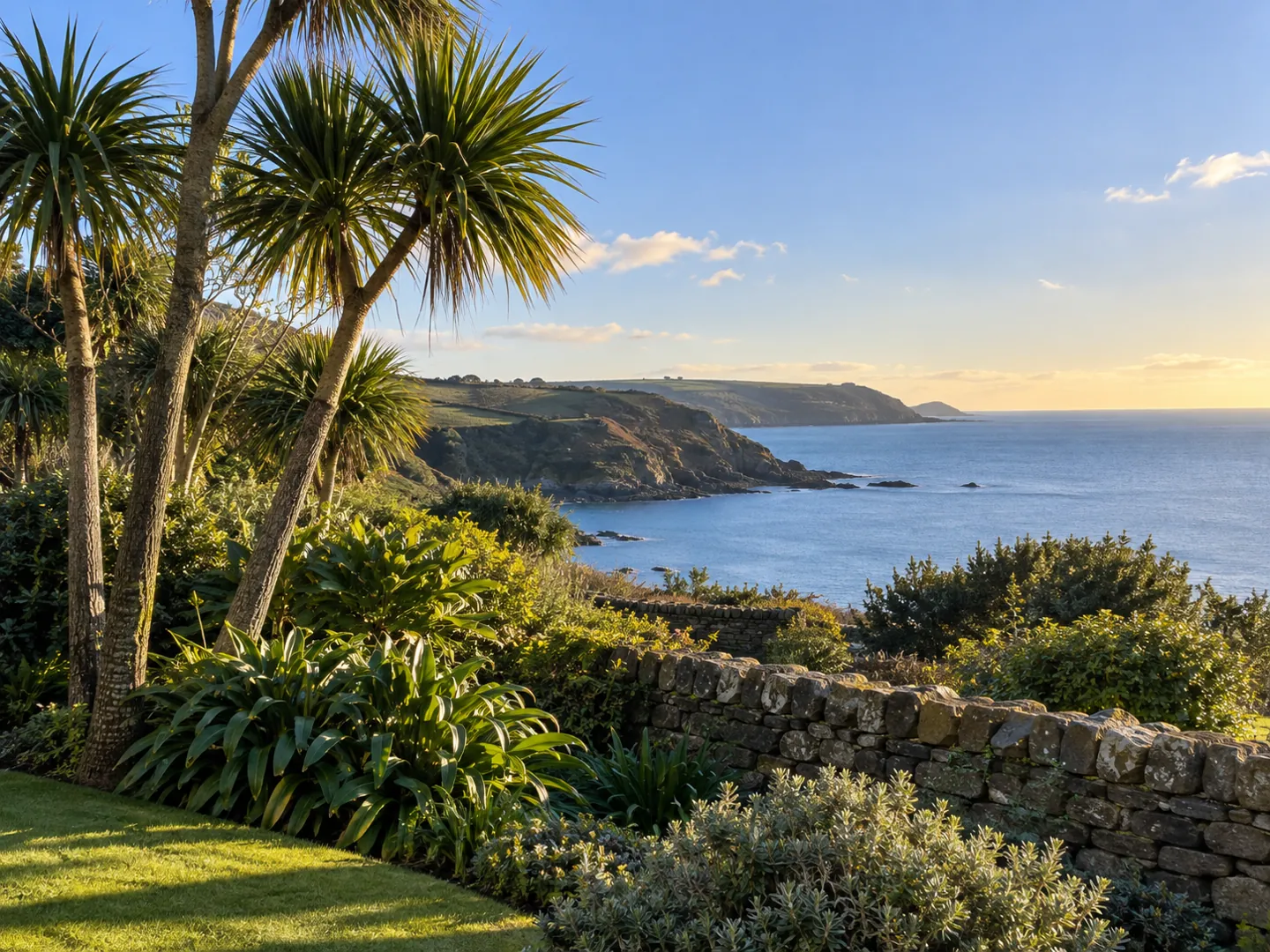
HOW SCIENTISTS MEASURE IT
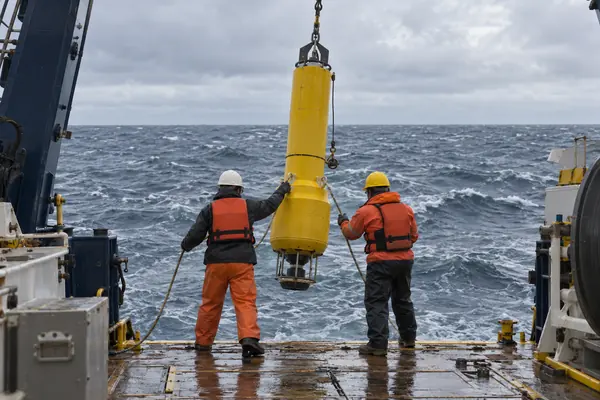
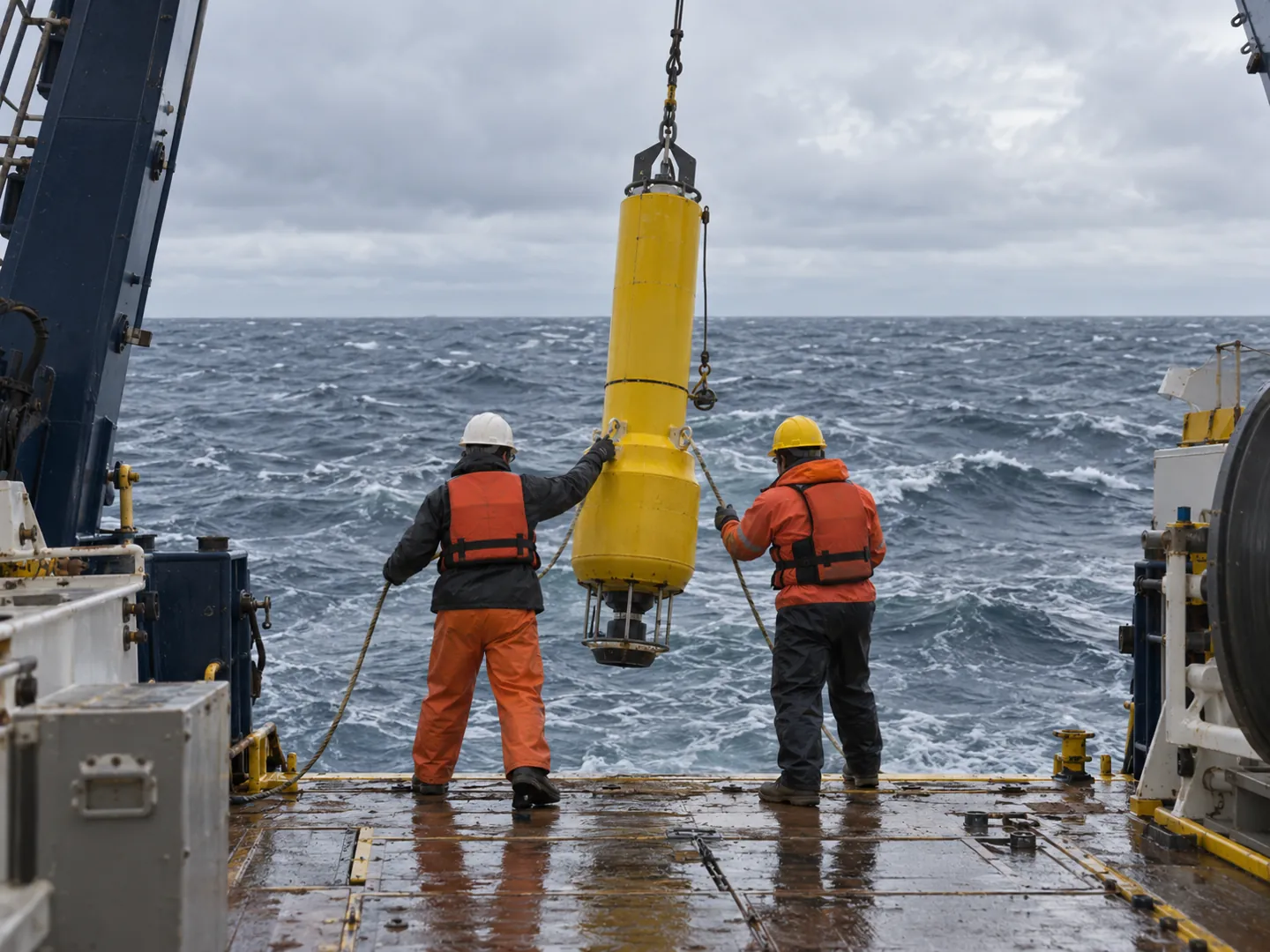
The RAPID project at 26°N, between the Bahamas and Africa, combines three kinds of measurement to estimate the overturning every hour.
Anchored wires with floats carry instruments that record temperature and salinity hourly on the east and west sides of the ocean.
Differences in seawater density between the two sides are turned into north-south flow using a principle called geostrophy.
Salty seawater moving through Earth's magnetic field induces a voltage in submerged telephone cables across the Florida Strait, tracking the current.
Winds push surface water too. This Ekman transport is small on average, 2 to 4 Sv, but causes the largest short-term swings.
TWO NUMBERS WORTH KNOWING
One figure for the heat the overturning carries,
one for the size of the Gulf Stream itself.
1.2 PW
Heat carried north by the AMOC
RAPID says the AMOC carries 1.2 petawatts of heat northwards, a quarter of the combined global atmosphere-ocean poleward transport and like the output of 1.2 million power plants.
HEAT · RAPID
≈ 30 billion kg/s
Gulf Stream flow along North America
Copernicus Marine describes the Gulf Stream as the largest current in the North Atlantic, carrying about 30 billion kilograms of water per second, 5 to 15°C warmer than surrounding waters.
WATER · COPERNICUS
RAPID's 2004 to 2024 record revealed a major downturn of the overturning in 2010 to 2011 that marked the start of a sustained decline since then.
TEST A CLAIM
Pick a common claim about the Gulf Stream or the AMOC. The bar shows how strongly the sources on this page support it.
Based on Copernicus Marine Service and the RAPID project at the National Oceanography Centre, which summarise IPCC assessments.
WHY IT MATTERS
The loop is driven by differences in temperature and salt. In the North Atlantic, warm water cools, becomes denser and sinks, then flows south along the ocean floor. Copernicus Marine says Greenland's melting ice has added around 5,000 km³ of fresh water since 1993, making surface water lighter so it sinks more slowly.
The Royal Meteorological Society notes that about 20,000 years ago, when North Atlantic waters did not sink as deep, the UK climate was colder and more variable. Copernicus says the AMOC has been stable through the last 11,700 years.
In conversation
No. Copernicus Marine says the Gulf Stream forms from the AMOC combined with the wind-driven North Atlantic subtropical gyre, which is two to ten times larger than the AMOC part of the flow.
They are at about the same latitude, but Copernicus notes New York ranges from about -2.2°C in winter to 29.5°C in summer, Porto from 5°C to 26°C, because winds from the Atlantic warm the air in winter and cool it in summer.
Since 2004 the RAPID array at 26°N has used moorings, a cable across the Florida Strait and wind data to estimate the overturning every hour. The moorings are now serviced every 18 months.
RAPID's record shows a major downturn in 2010 to 2011 and a sustained decline since. Climate models project further weakening over the 21st century.
Copernicus says a decline could significantly cool north-western Europe, by 2 to 3°C, despite global warming, and shift rainfall patterns. Changes would still sit alongside greenhouse warming.
Each figure on this page comes from the sources below.
ABOUT THIS NAME
doodlestreams.com is part of the DoodleSale portfolio. It isn't in an auction right now, but you can ask about leasing it.